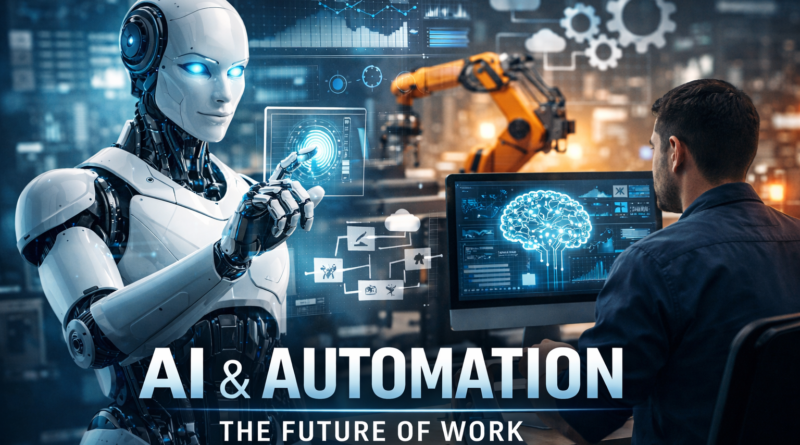
How Al and Automation Are Transforming the Future of Work
Artificial intelligence and automation are no longer future stories. They’re the tools changing how teams collaborate, how companies make money, and how careers are built. From simple task automation to advanced machine learning systems that inform strategy, these technologies are shifting value away from repetitive work and toward creative, strategic contributions.
This shift is both opportunity and disruption. For professionals, it means reskilling and leaning into uniquely human strengths. For businesses, it means rethinking processes, investing in automation tools, and using AI in business decisions to stay competitive. Below I break down what’s happening, why it matters, and practical steps you can take today.
Why AI and Automation Matter Today
AI in business is no longer experimental. Companies use machine learning and data analytics to predict customer behavior, optimize pricing, and automate back-office processes. This improves margins and speeds decision-making.
Automation tools such as RPA, workflow platforms, and cloud computing reduce manual errors and free up time for higher-value work. That shift improves productivity and creates headroom to innovate. As a result, workforce automation is becoming a core part of digital transformation strategies.
How Automation Improves Productivity
Automation software handles repetitive, rule-based tasks reliably. Examples include invoice processing, customer onboarding, and routine IT checks. When these workflows run automatically, human workers can focus on judgment, relationship-building, and creative problem solving.
AI augments productivity in different ways. Natural language processing helps teams summarize documents and respond to customers faster. Predictive analytics highlights where to invest resources. Together, automation and AI reduce cycle time and increase throughput without proportionally increasing headcount.
AI-Augmented Work: New Roles and Skills
The future of work isn’t just “jobs lost versus jobs created.” It’s about hybrid roles. New job types combine domain knowledge with data skills. Titles like AI product manager, data translator, and automation architect are on the rise.
Skills to prioritize include:
- Data literacy and basic statistics
- Prompting and working with generative AI
- Process mapping and automation design
- Critical thinking, creativity, and emotional intelligence
These skills position you for the high-value, well-paid roles emerging as companies invest in automation tools and AI projects.
Which Industries Will See the Biggest Impact
Finance, healthcare, logistics, and retail are early adopters. Finance uses machine learning for fraud detection and algorithmic trading. Healthcare leverages AI for diagnostics and operational efficiency. Logistics adopts automation for route optimization and warehouse robotics. Retail uses personalization engines to boost conversions.
But no industry is immune. Small businesses can also benefit through affordable automation platforms and cloud-based AI services.
Risks, Ethics, and Responsible Deployment
AI projects can go wrong if deployed without guardrails. Risks include biased models, data privacy breaches, and over-automation that breaks customer experience.
Responsible deployment means:
- Testing models for bias and accuracy
- Building human-in-the-loop checkpoints
- Applying robust data governance
- Measuring business outcomes, not just technical metrics
These practices protect customers and safeguard long-term value.
Practical Steps for Businesses and Employees
For businesses:
- Map processes to identify high-impact automation candidates.
- Start with low-risk pilot projects using RPA or automation software.
- Invest in cloud computing and data analytics to scale AI projects.
- Train staff and create cross-functional teams with both technical and domain expertise.
For employees:
- Learn to use common automation tools and AI assistants.
- Build a portfolio of projects that show measurable outcomes.
- Focus on skills where humans outperform machines, like negotiation and complex problem solving.
- Network in communities focused on AI jobs and digital transformation.
Small, iterative changes often win. A pilot that reduces processing time by 30 percent is better than a stalled enterprise project.
Measuring ROI: What Success Looks Like
Don’t measure AI efforts by technology alone. Track impact on revenue, customer satisfaction, cycle time, and cost per transaction. Use A/B testing where possible and set clear KPIs before deployment. This keeps projects aligned with business strategy and demonstrates real return on investment.
Conclusion: Prepare, Learn, and Lead
AI and automation will continue to reshape the workforce. The smart move is to treat this change as a people-first transformation. Learn the tech, map the processes, and invest in human skills that complement automation. Whether you’re leading a company or building your career, focus on tangible outcomes and continuous learning.
nkk
If you want, I can help you map the top three automation opportunities in your business or create a 90-day skill plan to move into AI-augmented roles. Which would you prefer?





Pingback: AI Forex Backtesting With Python: A Careful Walkthrough
Pingback: Algorithmic Forex Trading for Beginners: Bots and EAs